
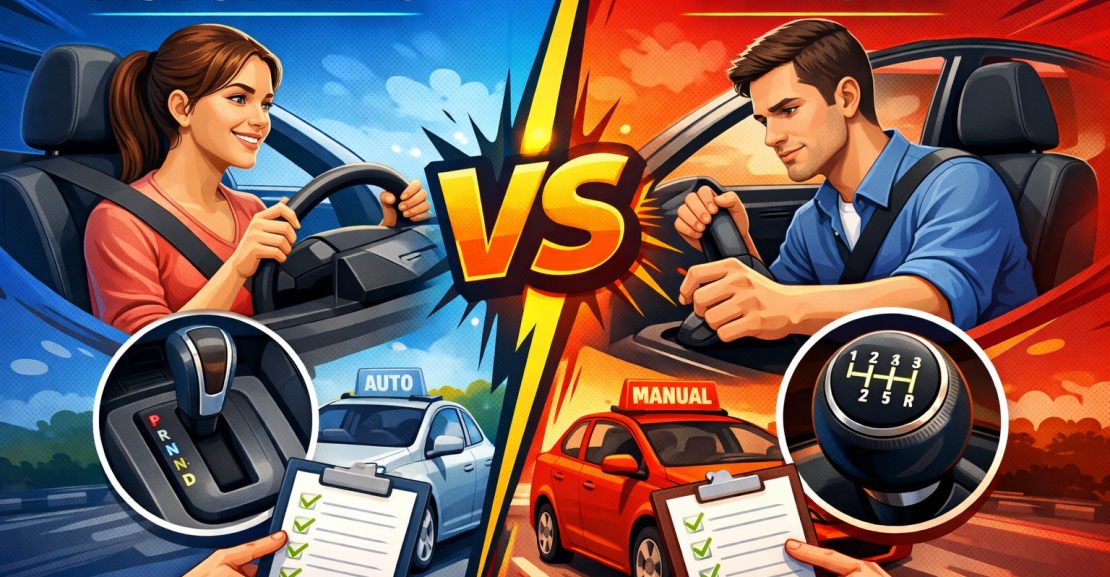
Automatic vs. Manual Driving Lessons: Choosing between automatic and manual driving lessons is one of the first and most important decisions learner drivers make. This choice affects not only how you learn to drive, but also the type of driving license you receive and the restrictions that may apply afterwards.
Understanding the rules for automatic vs manual driving lessons helps learners avoid costly mistakes and ensures their license matches their long-term driving needs. As you proceed, we explore the differences, rules, benefits, and license limitations associated with automatic and manual driving lessons.
READ ALSO:
- Minimum Age to Start Driving Lessons in the Netherlands
- How to Choose the Best Driving School in the Netherlands
- Theory Test Before Driving Lessons
- Are Driving Lessons Compulsory?
- How Many Driving Lessons Do You Need in the Netherlands?
Understanding Automatic vs Manual Driving Lessons
Automatic vs manual driving lessons differ mainly in how the car’s transmission is operated. Manual driving lessons require learners to use a clutch pedal and gear stick to change gears manually.
Automatic driving lessons, on the other hand, use a vehicle that changes gears automatically, allowing learners to focus more on steering, speed control, and road awareness.
From a learning perspective, automatic vs manual driving lessons appeal to different types of drivers. Some learners prefer manual driving lessons because they want full control over the vehicle. Others choose automatic driving lessons for simplicity and reduced stress, especially in busy urban traffic.
Rules for Taking Manual Driving Lessons
Manual driving lessons follow traditional driving instruction rules.
Learners must become comfortable with clutch control, gear changes, hill starts, and engine braking. Because manual cars require more coordination, manual driving lessons may initially feel challenging, but they often result in stronger overall driving skills.
When you take manual driving lessons and pass your practical driving test in a manual car, you receive a full driving license. This license allows you to drive both manual and automatic vehicles without restriction.
For this reason, manual driving lessons are often recommended for learners who want maximum flexibility in the future.
Rules for Taking Automatic Driving Lessons
Automatic driving lessons are governed by slightly different rules, especially regarding license restrictions. During automatic driving lessons, learners are not required to demonstrate clutch use or manual gear shifting.
The focus is on safe driving behavior, hazard perception, lane discipline, and vehicle control using only accelerator and brake pedals.
If you pass your driving test in an automatic car, your license is restricted to automatic vehicles only. This is one of the most important rules in the automatic vs manual driving lessons debate.
You are legally prohibited from driving a manual car unless you retake and pass a practical driving test in a manual vehicle.
License Restrictions: Automatic vs Manual
License restrictions are the key difference when comparing automatic vs manual driving lessons. A manual license comes with no transmission limitations. You can drive any standard car, whether it is manual or automatic. This makes manual driving lessons more versatile in the long term.
An automatic-only license clearly states that the holder may drive automatic vehicles only. Driving a manual car with an automatic license is considered driving without the correct entitlement, which can result in fines, penalty points, or insurance invalidation. These restrictions are crucial to understand before choosing automatic vs manual driving lessons.
Cost and Duration Differences
Another important aspect of automatic vs manual driving lessons is cost and learning time. Automatic driving lessons are often slightly more expensive per hour due to higher vehicle costs and maintenance. However, many learners need fewer lessons to reach test standard because automatic cars are easier to operate.
Manual driving lessons may take longer because learners must master clutch control and gear coordination. While this can increase the total number of lessons, it also builds deeper mechanical understanding.
When comparing automatic vs manual driving lessons, learners should consider both hourly rates and total learning time.
Difficulty Level and Learning Experience
The perceived difficulty of automatic vs manual driving lessons varies from person to person. Automatic driving lessons are generally considered easier, especially for nervous drivers or those who struggle with multitasking. Without the need to change gears, learners can concentrate more on traffic rules and road positioning.
Manual driving lessons demand more physical coordination, particularly at junctions, roundabouts, and hill starts. However, many instructors believe that manual driving lessons create more confident drivers who can adapt to a wider range of driving situations.
Career and Vehicle Choice Implications
Automatic vs manual driving lessons can also impact career opportunities and vehicle choices. Some jobs require a full manual driving license, especially roles involving company vehicles, delivery driving, or international travel. Taking automatic driving lessons may limit these opportunities unless the license is later upgraded.
Vehicle availability is another factor. While automatic cars are becoming more common, especially with electric and hybrid vehicles, manual cars are still widely used in many regions. Choosing manual driving lessons ensures you are not limited when renting or borrowing a car.
Upgrading from Automatic to Manual License
One advantage of automatic vs manual driving lessons is that learners can upgrade later. If you start with automatic driving lessons and obtain an automatic-only license, you can later take manual driving lessons and retake the practical test in a manual car. There is no need to redo the theory test in most cases.
This upgrade path offers flexibility for learners who want a quicker start on the road but plan to expand their driving options later. However, it does involve additional time and expense, which should be considered when choosing automatic vs manual driving lessons initially.
Safety and Confidence Considerations
Safety is often discussed in the automatic vs manual driving lessons comparison. Automatic cars reduce the risk of stalling and rolling back, which can be reassuring for beginners. This can lead to increased confidence during lessons and the driving test.
Manual driving lessons, however, teach greater vehicle awareness and control, which some argue contributes to safer driving in complex conditions. Both options can produce safe drivers when taught properly, but the learning style differs significantly.
Making the Right Choice

Choosing between automatic vs manual driving lessons depends on personal preferences, learning ability, future goals, and budget. Learners who value simplicity, quick progress, and reduced stress may prefer automatic driving lessons.
Those who want full license privileges, broader vehicle access, and long-term flexibility often choose manual driving lessons.
Understanding the rules for automatic vs manual driving lessons and the associated license restrictions is essential before committing to either path.
By weighing the advantages, limitations, and future implications, learners can make an informed decision that supports both their immediate needs and long-term driving ambitions.