
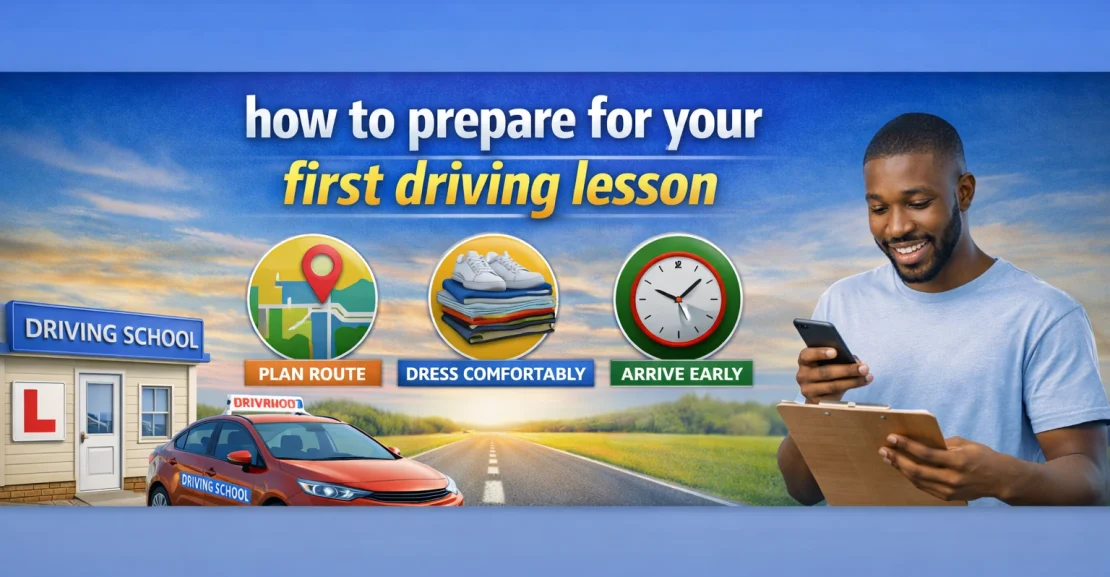
Whether you’re a complete beginner or have some basic knowledge, knowing how to prepare for your first driving lesson can make a significant difference in your confidence and overall experience.

Many learners also search for what to expect on their first driving lesson, and the truth is that proper preparation helps you understand what will happen, reduces anxiety, and sets you up for success from the very beginning.
As we proceed, it is pertinent to state that before stepping into the car, it’s important to have a clear idea of what will happen. Most first driving lessons begin with an introduction to the vehicle.
Your instructor will typically explain the basic controls, such as the steering wheel, pedals, mirrors, gear system, and dashboard indicators. You won’t be expected to know everything immediately. Instead, the lesson is designed to ease you into driving gradually.
In many cases, your instructor will take you to a quiet road or a low-traffic area. You may start by learning how to move the car slowly, stop safely, and maintain control. Understanding this beforehand helps eliminate unnecessary fear and allows you to focus on learning.
How to Prepare for Your First Driving Lesson
Below are ways to prepare for your first driving lesson:
Get familiar with basic car controls
One of the best ways to prepare is to learn about the basic parts of a car. Even if you haven’t driven before, having a theoretical understanding can boost your confidence.
Know the difference between the accelerator, brake, and clutch (if driving a manual car). Learn what the indicators do and how the mirrors are used.
Watching tutorial videos or reading beginner driving guides can help you visualise the process. This way, when your instructor explains things, you won’t feel overwhelmed by unfamiliar terms.
Bring the necessary documents and essentials
Preparation isn’t just about mental readiness—it also involves practical steps. Make sure you have your learner’s permit or provisional license, as required in your location. Without it, your lesson may not proceed.
Wear comfortable clothing and choose appropriate footwear. Flat shoes with good grip are ideal because they allow better control of the pedals. Avoid high heels, slippers, or heavy boots. You may also want to bring water, especially if your lesson is long or the weather is hot.
Get a good night’s sleep before your lesson
Your concentration level plays a major role in how well you perform. Driving requires focus, coordination, and quick decision-making. Being well-rested ensures you can absorb instructions effectively and react calmly during the lesson.
If you’re tired, you may struggle to understand directions or feel more anxious than usual. A good night’s sleep helps you stay alert and confident behind the wheel.
Manage your nerves and build confidence
Feeling nervous before your first driving lesson is completely normal. Many learners worry about making mistakes or looking inexperienced. However, remember that your instructor expects you to be a beginner. Their job is to guide you patiently.
Try simple relaxation techniques such as deep breathing before your lesson. Remind yourself that you are there to learn, not to be perfect. Mistakes are part of the process, and every driver started exactly where you are now.
Eat lightly before your lesson

It’s a good idea to eat something light before your lesson. Driving on an empty stomach can make you feel weak or distracted, while a heavy meal might make you sluggish. Aim for a balanced snack or light meal that keeps your energy steady.
Avoid alcohol or any substance that could impair your concentration. Staying hydrated is also important for maintaining focus.
Communicate with your instructor
Open communication is key to a successful first driving lesson. Don’t hesitate to tell your instructor if you feel nervous or unsure about something. They can adjust their teaching style to suit your comfort level.
Ask questions whenever you don’t understand something. Clarifying doubts early prevents confusion later. A good instructor will encourage questions and provide clear explanations to help you learn effectively.
Set realistic expectations for yourself
It’s important to understand that you won’t become an expert driver in one lesson. Your first session is about getting comfortable with the car and understanding basic movements. Setting realistic expectations helps you avoid disappointment and unnecessary pressure.
Focus on small achievements, such as starting the car smoothly or steering correctly. These small wins build your confidence and prepare you for more advanced skills in future lessons.
Practice observation skills
Driving isn’t just about controlling the car—it’s also about awareness. Start practising your observation skills even before your lesson. Pay attention to how other drivers behave, how they signal, and how they respond to traffic conditions.
When you’re a passenger, observe road signs, traffic lights, and lane markings. This habit will help you feel more prepared when you start driving yourself.
Know the basic road rules
Having a basic understanding of traffic laws is essential. Learn common road signs, speed limits, and right-of-way rules. This knowledge will help you follow instructions more easily during your lesson.
You don’t need to memorise everything, but being familiar with the basics will give you a strong foundation. It also shows your instructor that you are serious about learning.
Stay positive and patient
Learning to drive is a journey that requires patience. Some skills may come naturally, while others may take time to master. Staying positive helps you remain motivated and enjoy the learning process.
Celebrate your progress, no matter how small. Every lesson brings you closer to becoming a confident and independent driver.
READ ALSO:
- What Should I Wear to My First Driving Lesson?
- What Happens in Your First Driving Lesson?
- What to Expect on Your First Driving Lesson
- What to Bring to Your First Driving Lesson
- First Driving Lesson Tips for Nervous Drivers
Frequently Asked Questions

What should I bring to my first driving lesson?
You should bring your learner’s permit or provisional license, comfortable clothing, suitable footwear, and any required documentation. It’s also helpful to bring water and a positive mindset.
How long does a first driving lesson usually last?
Most first driving lessons last between one and two hours, depending on the driving school and your instructor’s plan.
Will I drive on my first lesson?
Yes, in most cases, you will get behind the wheel during your first lesson. However, it will usually be in a quiet, low-traffic area under close supervision.
Is it normal to feel nervous before my first driving lesson?
Absolutely. Nervousness is very common among beginners. With proper preparation and a supportive instructor, your confidence will improve quickly.
Do I need to know anything before my first driving lesson?
You don’t need prior experience, but having basic knowledge of car controls and road rules can make your learning process smoother.
What if I make mistakes during my first lesson?
Making mistakes is part of learning. Your instructor expects it and will guide you through corrections. Each mistake is an opportunity to improve.
Preparing for your first driving lesson doesn’t have to be complicated. By understanding what to expect on your first driving lesson, organising your essentials, and approaching the experience with a calm and positive mindset, you can set yourself up for success.
With the right preparation, your first lesson will be an enjoyable and confidence-building step toward becoming a skilled driver.